

Approach
No agency, no account manager. One person who thinks it up and builds it.
You deal directly with the person doing the work. No briefing that gets diluted along the way, no referral to a colleague, no report without a conversation.


How one person does this
I don't sell hours. I build systems.
A campaign that runs manually costs time again every month. A campaign built as a system keeps running. Clay connected to integrations and webhooks. AI agents that produce content. Self-built software where no ready-made tool exists. With AI as leverage, one person does what took a team a few years ago.
Localys
A B2B platform I built from the ground up. It connects local suppliers directly with professional buyers such as hospitality: from offering and ordering to invoicing. With CO2 reporting and AI assistance. Suppliers configure everything themselves, such as delivery areas, costs and price agreements. Behind it runs a GTM engine I also built myself, which finds and approaches new suppliers and buyers.
Zus & Zo product agent
AI that writes product descriptions for a webshop with thousands of items. The information comes from supplier Excel files, all formatted differently. The agent learns from every correction, a person approves everything before it goes live, and the products sync from the agent straight to the webshop.
Apollo Command Center
CRM, thought leadership content, pomodoro timer, project management and infographic summaries of meetings, recorded with hardware or software. Some of the functions I also control from a small touchscreen on my desk, without opening my laptop. The system I sell is the system I use.
Why allbound
Most marketing fights over three percent of your market.
Of every hundred companies in your market, three are ready to buy now and seven are open to it. That is where the most competition and the lowest return are. Inbound mainly reaches that top ten percent. Outbound gets the other ninety percent moving before they start searching themselves.
If you only aim at the top layer, you are fishing in the busiest pond.

Market segmentation after Chet Holmes
The funnel
Why you need several things at once.
A potential customer isn't only in a market segment, they are also in a phase. What works for someone who has just discovered you doesn't work for someone already comparing quotes.
1 Awareness they don't know you yet
Becoming visible to people who don't know you exist yet.
2 Interest they have noticed you
Now that they know you, it is time for the first real touchpoint.
3 Consideration they are comparing you with others
Staying in view and showing you know what you are talking about.
4 Intent they are about to decide
No new tricks: being present at the moment of decision.
5 Purchase the deal is done
The conversation, the quote and the deal are yours. I make sure you are at the table with companies that already know who you are and what you do.
How I build it up
Twelve steps, from market to machine.

Laying the foundation
1 · The market: defining the ideal customer profile and mapping the Total Addressable Market. I also interview existing customers, because they know things about your market no tool does.
2 · The approach: with the market in view and the budget known, we decide the route.
3 · The tools: Clay, email sequencers, marketing automation, LinkedIn automation. Set up according to the approach and connected to the website.
Creating the message
4 · The message: which pain points do we test, and which value proposition do we start with?
5 · Creatives: visuals and video that fit the brand, for ads and thought leadership. I make them myself with AI, no film crew needed.
Getting things moving
6 · Advertising: the audience sees the brand come by, as an introduction.
7 · Connect: at the same time, connecting on LinkedIn. Step by step, because there are limits.
8 · Posts: the audience gets to know the brand and the people behind it. This builds trust.
9 · Outreach: now that they have already seen the brand without noticing, it is time for personal contact by email or LinkedIn. Sometimes this can happen earlier; the approach decides.
10 · Remarketing: seeing something once is rarely enough. Targeted ads for people who visited the site or responded before, across several platforms.
Steering
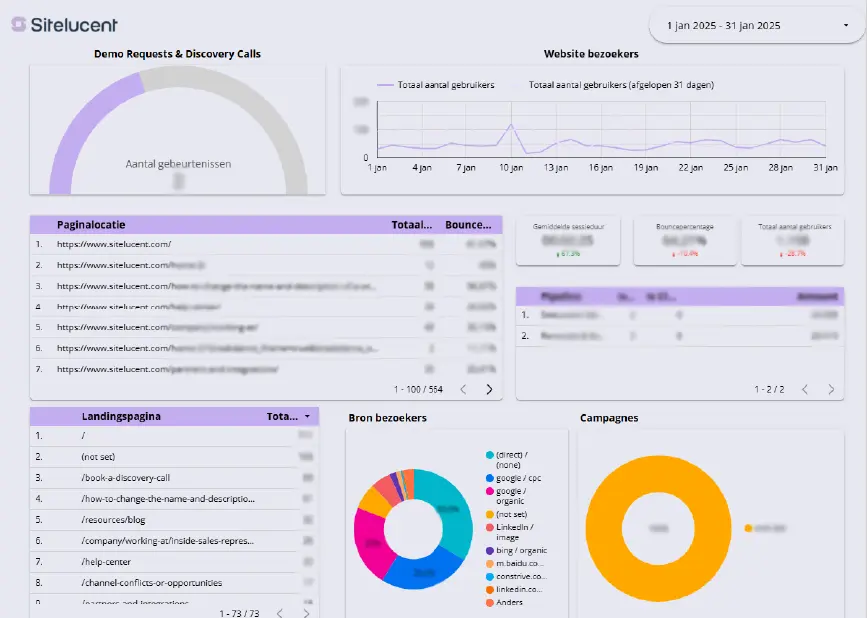
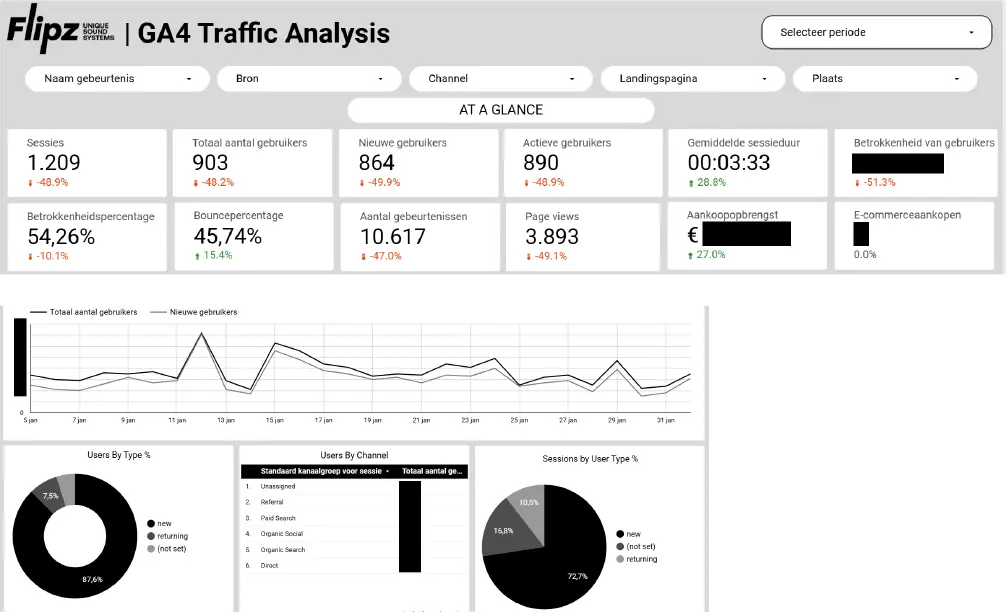
11 · Reporting: a dashboard that shows around the clock what campaigns, outreach, LinkedIn and website visits deliver. We go through it together at least once a month.
12 · Optimisation: the reporting delivers insights, the approach gets adjusted, new angles get tested. Better results from the same budget.

How you can tell it works
A dashboard that keeps watch day and night.
Campaigns, outreach, LinkedIn and website visits in one overview. We go through it together at least once a month. No report without a conversation.
What I need from you
Not much, but not nothing.
About an hour a month for a catch-up.
Access to your systems.
Someone who can make decisions without three meetings.
Patience in the first weeks: outbound pays off faster than inbound, but nothing pays off in week one.
Curious what this looks like for your market?
Thirty minutes, video call, no strings attached. I look at your site, your visibility and your market beforehand, and tell you what I see.
Book a strategy call